Pages

Wednesday, December 7, 2011

Additional Buyer's Stamp Duty for a Stable and Sustainable Property Market

Dear Readers,

Hot NEWS!

Additional Buyer's Stamp Duty to curb the property market, specifically the private property market.

'Quick and Dirty' Snap Analysis of the Impact of this Policy
First and foremost, the demand for private property will definitely be affected with most foreign buyers out of the picture unless 1) there are buyers who are able to fork out 10% of the property price in cash and 2) if they assess that the pricing and rental yield of the property are still undervalued even after paying a 10% ABSD.
 
Singaporean and Singapore PR Property Investors holding to multiple units will need to go through the same situation facing foreign buyers, having additional 3% of the property price in cash or CPF and also to assess if the pricing and rental yield of the property being attractive, even with the 3% ABSD.
 
Genuine sellers who wants to sell their house urgently will lose part of the demand in the property market with the expected exit of foreign buyers, property investors and also the expected oversupply that is going to flood the market, coupled with the 41,000 unsold units in the market (highlighted in YELLOW below).

Overall impact in the market => Decrease in Demand for Private Residential Properties, leading to a stabilizing property market or a declining market. If the market is in decline, then it would mean that property buyers who had bought and do not have the holding power, will be forced to sell their properties below valuation, contributing to a stablizing / declining market. If the market is expected to fall as reported by the various property analysis reports (20-30% decline), together with this measure, it would mean that buyers who do not have enough equity or had refinanced their properties may need to have their properties foreclosed by banks if they do not have enough money to top up the difference in outstanding loan and property valuation.

Buyers who are dependent on rental income to cover their mortgage would also be faced with a potential financial problem as they may be required to top up their mortgage payment in part or in full if the rent for their property is not sufficient to pay for mortgage or, worst still, they are not able to get a tenant, in view of the influx of supply flooding the market.
 
Prayers...
In the worst case scenario, interest rate increase + decreasing demand for private properties + no tenant = fire sale of properties leading to a property market crash.
 
What's can YOU do?
If indeed you are concerned about your property portfolio and the measures that the Government had implemented, I would sincerely advice you to engage a property consultant to share with him/her on your property portfolio and financial management so that you will be able to plan your NEXT move. I hope that no one will be caught in a potentially erratic property cycle that we are heading towards. (Economic Uncertainty, Interest Rate Fluctuation, Oversupply, Decreasing Demand... Sounds Bad... But ALWAYS look on the BRIGHT SIDE of LIFE. ACT NOW!)
 
Lovely Regards,
Lynn ONG (王丽英)
Senior District Manager
ECG Property Novena District
L3009759F / R014-395F
BSc. Real Estate (NUS)
Mobile: (+65) 8479 3149
Blog: http://www.lynnlovelyhomes.blogspot.com/
[Blogging on Analysis of Listings and Real Estate News]


Additional Buyer's Stamp Duty for a Stable and Sustainable Property Market
07 Dec 2011 07:40 PM - MND Website
The Government announced today an Additional Buyer’s Stamp Duty (ABSD)to be imposed on certain categories of residential property purchases. The ABSD will be imposed over and above the current Buyer’s Stamp Duty, and will apply to the purchase price or market value of the property (whichever is higher) for the following purchases:

a) Foreigners and non-individuals[1] (corporate entities) buying any residential property will pay an ABSD of 10%;
b) Permanent Residents (PRs) owning one[2] and buying the second and subsequent residential property will pay an ABSD of 3%; and
c) Singapore Citizens (Singaporeans) owning two2 and buying the third and subsequent residential property will pay an ABSD of 3%.

The ABSD will take effect on 8 Dec 2011[3]. Remission of ABSD will be given for options granted on or before 7 Dec 2011 and exercised within 3 weeks (i.e. on or before 28 Dec 2011) or the option validity period, whichever is the earlier.

2) The Government's objective is to promote a sustainable residential property market where prices move in line with economic fundamentals. Prices of private residential properties have continued to rise, albeit more slowly in the last two quarters. Prices are now 13% above the peak in 2Q1996 and 16% above the more recent peak in 2Q2008.

3) Even with the current economic uncertainties, the demand for private residential property remains firm. Given the uncertainty in stock markets and with interest rates remaining low, private property in Singapore continues to attract investors, local and foreign. Excessive investment demand will however make the property cycle more volatile, and thus increase the risks to our economy and banking system.

4) The Government has therefore decided to impose the ABSD to moderate investment demand for private residential property and promote a more stable and sustainable market. A higher ABSD rate for foreign buyers in particular is necessary, in view of the large pool of external liquidity and strong buying interest from abroad, and the relatively small size of the Singapore market. Foreign purchases account for 19% of all private residential property purchases in 2H2011, up from 7% in 1H2009.

5) The ABSD will apply in addition to the existing Buyer’s Stamp Duty on property purchases, which are applied at following rates: 1% on first $180,000 of purchase consideration or market value of the property (whichever is higher), 2% on the next $180,000 and 3% for the remainder.

6) For purchases made jointly by two or more parties (e.g. a Singaporean with a PR, or a PR with a foreigner), the higher applicable ABSD rate will be imposed. For example, if a citizen purchases a property with a foreigner, the ABSD of 10% will apply. In the case of a joint purchase by Singaporeans, who each already owns properties, the ABSD of 3% will apply as long as one of the purchasers already owns two properties.

7) Singaporean first time buyers and upgraders, and buyers of HDB flats[4] will not be affected by the new measure. Certain reliefs will be provided so that the measure will not impact home occupation demand by residents. For example, relief will be provided for Singaporean-foreigner/PR married couples buying their homes. Reliefs will also be provided for qualifying developers and for purchases falling within the scope of Singapore’s international trade agreements. More details will be provided on the IRAS website.
 
Adequate Supply of Private Housing to Meet Demand
8) The Government will also continue to ensure an adequate supply of private housing to meet medium term demand. There are 41,000 unsold private housing units in the pipeline. The Government will inject sites that can potentially yield a total of 14,100 units in the 1H2012 Government Land Sales (GLS) Programme, similar to the supply in previous GLS programmes. Of these, about 7,000 units will be from sites on the Confirmed List. These numbers take into account the ample pipeline supply and the dampening effect of the ABSD.

9) To give more Singaporean households the chance to own or upgrade to private housing, the Government raised the monthly income ceiling for the purchase of new Executive Condominiums (ECs) from $10,000 to $12,000 in Aug 2011. We will expand the EC supply in 2012 and are prepared to release sites that can potentially yield 5,000 EC units for the entire year. Sites for 3,500 EC units will be made available in 1H2012, including 3,000 EC units on the Confirmed List. The Confirmed List quantum is comparable to the 3,000 EC units from 5 sites sold for the whole of 2011. More details will be provided in the press release for the 1H2012 GLS Programme on MND’s website.

10) The Government will continue to monitor the property market and adjust our property policies in step with changes in the market and the economy. Mr Tharman Shanmugaratnam, Deputy Prime Minister and Minister for Finance, said, “We have always had open markets and must keep them that way. However, the reality is that investment flows into our property market are now larger than before, and unlikely to recede as long as interest rates remain low. The additional buyer’s stamp duty should help cool investment demand, and avoid the prospect of a major, destabilising correction further down the road.”

11) Khaw Boon Wan, Minister for National Development, said, “We are ramping up the supply of new EC units through the Government Land Sales Programme. This will help higher-income Singaporeans own private condominium units in an affordable way, as the sale of new EC units is restricted to Singaporean households only.”

Issued by the Ministry of Finance & Ministry of National Development
7 Dec 2011

ANNEX 1
Existing and Additional BSD Rates
Transaction
On and before 7 Dec 2011
On or after 8 Dec 2011
Existing BSD rates on the total purchase price or market value (whichever is higher)
Additional BSD rates on the total purchase price or market value (whichever is higher)
Foreigners and non-individuals (corporate entities) buying any residential property
1% on first $180,000
2% on next $180,000
3% for the remainder
1% on first $180,000
2% on next $180,000
3% for the remainder
+10%
PRs owning one and buying the second and subsequent residential property
+3%
SCs owning two and buying the third and subsequent residential property
+3%
PRs buying the first residential property
1% on first $180,000
2% on next $180,000
3% for the remainder
No Change NIL
SCs buying the first and/ or second residential property

Examples of Additional and Total Buyer’s Stamp Duty Payable
Assume property purchase of $1 million

SCs buying first and/or second residential properties

PRs buying first residential property
Foreigners and non-individuals PRs owning one and buying the second and subsequent residential property SCs owning two and buying the third and subsequent residential property
Existing buyer’s stamp duty
$24,600 $24,600 $24,600 $24,600
Additional buyer's stamp duty NIL
$100,000 $30,000 $30,000
Total stamp duty on $1 million purchase of residential property $24,600
$124,600
$54,600
$54,600


[1]This includes corporate, trusts and collective investment schemes amongst others.
[2] A person is regarded as owning a property for the purpose of ABSD as long as he owns part of that property. Overseas properties will be excluded from the count of properties owned.
[3] The measure will apply to a property purchase if the option for purchase is exercised or the agreement for transfer is executed, whichever is earlier, on or after 8 Dec 2011. Where no option for purchase is granted and only an agreement for transfer is executed, then the measure will apply to the agreement for transfer if it is executed on or after 8 Dec 2011.
[4] The purchase of HDB properties will not be affected by this measure. Only Singaporeans and Permanent Residents are eligible to be HDB flat lessees (i.e. own a flat). Existing residential property owners who buy an HDB flat or a new unit under the Design, Build and Sell Scheme (DBSS) or the Executive Condominium (EC) Housing Scheme will not be subject to the ABSD, since the existing flat/property will have to be disposed of as part of the conditions for the purchase of the HDB/DBSS flat or EC unit.

Saturday, December 3, 2011

21 HDB blocks in Redhill Close chosen for SERS

Dear Readers,

Fresh from the Oven.

Happy Reading. 

Will dedicate a post specifically on what SERS is, the motivation of SERS and what it means for HDB owners. 

Till then.

Lovely Regards,
Lynn ONG (王丽英)
Senior District Manager
ECG Property Novena District
L3009759F / R014-395F
BSc. Real Estate (NUS)
Mobile: (+65) 8479 3149
Blog: http://www.lynnlovelyhomes.blogspot.com/
[Blogging on Analysis of Listings and Real Estate News]

________________________________________________
By Channel NewsAsia, Updated: 03/12/2011

21 HDB blocks in Redhill Close chosen for SERS

SINGAPORE: Twenty—one blocks of HDB flats in Redhill Close have been chosen for the government’s Selective En bloc Redevelopment Scheme (SERS). They are blocks 1 to 3 and blocks 5 to 22, with a total of 878 units.

The Housing and Development Board (HDB) will build about 1,200 units of two—room, three—room, four—room and five—room flats in Henderson Road to re—house the flat owners.

The new blocks, to be ready in 2017, will be built up to 48—storeys high, offering panoramic views of the city skyline.

The current flats, built in 1955, will be more than 60 years old by the time the residents move out.

The HDB said the replacement flats are at a prime location, within walking distance from Redhill and Tiong Bahru MRT stations. Facilities such as shops, markets and food centres are just a stone’s throw away.

Many recreational facilities and spaces such as children’s playgrounds and fitness corners for adults and the elderly, a hard court and community garden, as well as a multi—storey car park will be provided. The HDB said these facilities will provide ample opportunities for social interaction.

Eligible flat owners will be invited to register for the new replacement flats in the fourth quarter of 2012. The HDB will hold an exhibition from December 7 to 13 at Bukit Merah Community Centre to provide more information on the development.

The site is the 76th site to to benefit from SERS, which offers residents the opportunity to move to a brand new flat nearby with a fresh 99—year lease, better design and modern facilities.
—CNA/ac
________________________________________________

Singapore Home Prices Poised to Plunge

Dear Reader,

Another piece of news from Wall Street Journal.

Summary - For those too busy to read the whole article
Daiwa's Capital Market Analyst, Mr David Lum predicting a 22% to 26% decrease in housing price by end of 2014.

Reasons:
1) Singapore's GDP Growth expected to slow and stay low.
2) Immigration policy tightens to slow down population growth
3) Huge Supply flowing into market, coupled with large number of unsold units from launched projects
4) Rental and Capital Markets expected to be affected

Additional Pointers from Me to Home Owners / Investors:
1) Assess your own financial situation to see if you have the holding power to tide through the property cycle. (With expected falling rent and possibly an increasing interest rate on your mortgage.)

2) If not, price the unit reasonably for sale to cash out of the property market first. There are still buyers looking for a reasonable transaction and they have different motivation from investors, allowing them to consider buying at such a market.

Enjoy reading.

Lovely Regards,
Lynn ONG (王丽英)
Senior District Manager
ECG Property Novena District
L3009759F / R014-395F
BSc. Real Estate (NUS)
Mobile: (+65) 8479 3149
Blog: http://www.lynnlovelyhomes.blogspot.com/
[Blogging on Analysis of Listings and Real Estate News]


__________________________________________________
The Wall Street Journal - Southeast Asia

November 28, 2011, 4:12 PM SGT

Singapore Home Prices May Be Poised to Plunge

If you’ve been waiting for a chance to purchase a property in Singapore, maybe you should wait some more.

The city-state’s red-hot residential real estate market could be poised to plummet 20% to 30% over the next three years – at least according to some analysts, who say demand is dampening just as a flood of new flats is hitting the market.

“We now expect a multi-year downturn in the residential market, with overall private home prices falling by 22% to 26%,” by the end of 2014 said David Lum, an analyst for Daiwa Capital Markets, in a recent report. Analysts predicting a drastic drop in Singapore property prices are still in the minority. Yet a growing number of analysts are at least somewhat concerned that the conditions driving Singapore property prices and rents higher in recent years – notably brisk demand and tight supply – are about to be reversed.

The country’s gross domestic product growth is expected to slow this year and stay low. Meanwhile, recent government restrictions on migration are expected to crimp the population growth, which was also underpinning demand for homes.

“In 2005 to 2010, Singapore’s population grew by 21%, or 3.3% (per year). This is over three times faster than the 1% per year recorded in the previous four years,” said Standard Chartered Bank in a report last week. “Due to the high population growth and the low home completions, residential rents and prices have climbed 75% since 2005.”

As political pressure from concerned citizens has forced Singapore to make it tougher for foreigners to work in Southeast Asia’s financial capital, population growth will slow to less than 2% per year and residential property prices and rents could fall as much as 30% over the next three years, the report said. [Reported before on Straits Times Article on 27th November 2011 - Will Singapore Property Market Soften - To Read, Click Here]

While prices and sales of new flats are stable recently, there are some creeping indicators that demand and prices could tip soon. In October, pre-sales for lower-priced projects were stronger than for luxury projects, suggesting that consumers are becoming more price-sensitive.

The number of unsold properties is rising and expected to continue climbing, as more than 100,000 new residential units are scheduled to be completed by both public and private sector developers over the next three years, according to the Standard Chartered report.

“From late 2012 we believe the sector’s structural issues – rising levels of unsold inventory due to robust launch schedules coupled with a formidable pipeline of completions – will continue to depress rents and capital markets,” Daiwa’s Mr. Lum said.

Singapore has faced similar predictions of big declines in property prices, and slowdowns in population growth, that didn’t fully materialize. During the 2008-2009 global financial crisis, for example, some analysts worried about a potential swoon in the Singapore property prices, and while the market did turn down briefly, it snapped back quickly on the back of a strong economic recovery in 2010. Many analysts note that the government’s close regulation of Singapore’s property market, including oversight over releases of land for new construction, will help keep the market on an even keel in the long run.

The latest reports were analyzing the prices of stock prices and real estate investment trusts and were not intended as guides for home buyers. However, should their predictions on real estate prices turn out to be correct, it could be good news for families that have been waiting for a better deal before they buy – and of course bad news for anyone that has just invested in a home in Singapore.
__________________________________________________ 

Will Singapore Property Market Soften?

Dear Reader,

News report in the media about Singapore's Property Market shall also posted on my blog so that you can just visit my blog to read those news.

Apologies for the late posting for this series of news.

Thanks!

Lovely Regards,
Lynn ONG (王丽英)
Senior District Manager
ECG Property Novena District
L3009759F / R014-395F
BSc. Real Estate (NUS)
Mobile: (+65) 8479 3149
Blog: http://www.lynnlovelyhomes.blogspot.com/
[Blogging on Analysis of Listings and Real Estate News]

The Straits Times
Nov 27, 2011
Will S'pore property market soften?

_______________________________________
Report predicts 30% fall in home prices on gloomy global outlook, shrinking demand and oversupply

By Esther Teo

Property has been enjoying a boom like no other in the past two years but if Standard Chartered's experts are right, the good times are coming to an end.

The bank's analysts have turned markedly bearish, with a report predicting residential rents and prices plunging 30 per cent over the next three years.

This will be a painful reversal given that prices surged 18 per cent last year - as Singapore bounced back from the global financial crisis - and a further 6 per cent in the first nine months of this year.

Stanchart sees problems ahead, including slower population growth due to stricter immigration policies and the unprecedented supply of completed homes coming onstream.

Rock-bottom interest rates could also edge up from 2013, further dampening the market.

The debt crisis in Europe and concerns of a severe downturn in China could also have a significant impact on demand and prices.

After four rounds of cooling measures since September 2009, the Urban Redevelopment Authority (URA) has found price gains moderating for eight consecutive quarters.

They inched up just 1.3 per cent from the second quarter to the three months to Sept 30.

Another report - from DTZ Research - noted that transaction volumes dropped 25 per cent in the third quarter as global uncertainty and stock market volatility took their toll on sentiment.

So with all asset classes said to move in cycles - the classic boom and bust scenario - is the Singapore property market headed for a sustained downcycle and a correction in prices?

The Sunday Times looks at the factors at play:

Economic outlook

The euro zone crisis is one of the big factors determining where the property market heads, experts note.

Singapore's economy, buffeted by global weakness and uncertainty, is expected to grow at a sluggish 1 per cent to 3 per cent next year but that could worsen if Europe's woes escalate or a full-blown financial crisis erupts.

Experts add that while any contraction in the global economy will hurt Singapore, the extent remains unknown as the European crisis plays out in slow motion.

There are also other mitigating factors in play.

'Property markets go through cycles, just like economies. Only if

you are in an emerging market where there is a long period of strong economic growth, might you have a long property market upcycle', said DTZ's head of Asia-Pacific research Chua Chor Hoon.

Employment and businesses are affected when the economy contracts so this will affect buying sentiment and the ability to buy homes.

Prices will fall if the major global economies deteriorate as Singapore's economic growth will be affected, she added.

DBS economist Irvin Seah said slowing economic growth typically places a heightened risk of depreciating asset values.

But housing demand in Singapore has remained in good shape as unemployment remains low with wages continuing to rise.

The local property market is also known to be fairly resilient, experiencing just a short blip during the global financial crisis before a sharp rebound at the end of 2009, Mr Seah noted.

However, he highlighted the scenario of a hard landing in China - Singapore's largest export market - as possibly impacting the market most severely.

But the risk of a hard landing in China is 'moderate' and not big enough to warrant concern as yet.

Chesterton Suntec International research head Colin Tan noted that a recession coupled with job losses is likely to drag prices down.

'The moment when potential buyers feel insecure about their future source of income is when they pull back from buying or begin to divest,' he said.

In a downturn, foreign capital could also become defensive and pull back from investing overseas, some experts say.

On the other hand, while another global crisis might also dampen sentiment, Mr Tan noted it might lead to more money being pumped into the markets as governments act to salvage their economies.

Already, there is talk of a third round of quantitative easing by the United States Federal Reserve.

These high levels of liquidity flooding the market might find their way to Asia and continue to support property prices.

Interest rates

Low interest rates that are making mortgages far more affordable have also helped to support the housing market.

And with the United States Federal Reserve pledging to keep rates low until mid-2013, rates here are also likely to remain flat.

However, Stanchart property analysts say that low borrowing costs are not enough to sustain the market.

The increase in the public housing income ceiling and the lower pricing of new HDB flats - expected to siphon demand from the private sector - should still lead to price falls.

What more then if rates rise, likely around mid-2013 if the US economy gets back into shape.

Private home buyers are estimated to spend more than 38 per cent of their monthly gross income on mortgage repayments even though rates are only at 1.1 per cent, the report noted.

This is slightly higher than the Government's target of 30 per cent to 34 per cent. 'If interest rates normalise to the 10-year average of 4 per cent, we estimate the proportion of income spent on mortgage repayments to rise to 50 per cent,' it added.

Rising interest rates are expected to reduce affordability and trim market demand, possibly leading to prices dipping as well.

However, as some experts note, any decision by the US Fed to raise rates will mean that its economy

is finally on the mend and that could signal that the global economy is out of the doldrums, which is good news for investors.

Slower population growth

Tighter immigration policies have recently been introduced in response to unhappiness over strained infrastructure and congestion.

The Stanchart report noted that population growth is expected to be halved to 1.5 per cent to 2 per cent for the next three to five years as the Government looks to encourage productivity gains and reduce its reliance on foreign workers.

But this reduction might have a knock-on effect on leasing demand and rents, especially with foreigners - including permanent residents - making up 37 per cent of the population.

Experts note that if demand from tenants falls, rents and correspondingly yields - which are already low at 2.6 per cent to 3 per cent - will fall, with prices following eventually.

But AmFraser Securities equity analyst Lau Wei Chong noted that although the intake of foreigners has slowed, the Government maintains its open door policy to talent, which will see the population continue growing. This continued influx will mitigate any sharp fall in property prices, he said.

Oversupply

The large number of completed units from the bumper supply of state land releases raises the question of whether these homes can be absorbed by the market.

The report noted that the number of homes to be launched for sale is similar to that in 2000, when prices plummeted 20 per cent.

As of the third quarter, 37,400 homes are in the pipeline seeking the required pre-requisite conditions to be launched.

This is similar to the 36,400 units in the first quarter of 2008 and the 37,500 units in the second quarter of 2000.

Prices fell 25 per cent in 2009 and 18 per cent in 2001, the report pointed out.

Completions are also expected to peak in 2015 with a staggering 47,000 units built.

This is almost three times the number of private homes developers sold last year, which was itself a record.

The unprecedented supply of new HDB flats - 50,000 in total for this year and next - will also divert buying demand from the private sector.

However, Dr Chua Yang Liang, head of research at Jones Lang LaSalle South-east Asia, noted that the population has expanded by about 2.8 per cent a year over the past 10 years while the number of completed homes has increased by 2.1 per cent a year.

Given the way the growing population has outpaced the housing stock, this has led to a backlog of demand for homes.

'If the economic crisis is not too severe, this will help to mitigate the sharpness of any price correction,' Dr Chua added.

esthert@sph.com.sg

_______________________________________

Thursday, November 24, 2011

Do you know the market well??? What's up ahead?

Dear Reader,

Thanks for reading this post.

How knowledgeable are you or your agent?
I am wondering if property sellers and buyers are knowledgeable about the trending in the market and the direction that the property market is potentially going to head in the near future and within the next 5 years.

I am also wondering if your agent is kept abreast of the market conditions so that he/she would be able to share his/her opinions and advice clients well. Do they read extensively and analyse each report carefully before agreeing/disagreeing with the argument and use these knowledge to your advantage?

"Knowledge is power? Actually useful knowledge is REAL power."

So what's the proposition?
I'm keen to share my opinions on the news reported and reports that I read from consultancy firms like Jones Lang LaSalle, CBRE, DTZ, Colliers and Cushman & Wakefield.

Why? The fundamental reason is because I would like to share real estate knowledge with more people as I believe that real estate is not an easy field to comprehend and many sellers, buyers and even agents may find it difficult to grapple with. The more knowledgable the population is with real estate, the closer it is to the shared vision that I have with my fellow colleagues. (http://www.lynnong.net/agent-about)

So what's the trending in the near future?
Mr Ku Swee Yong, a very respected analyst in Real Estate, commented on Today on 4th November 11, about the huge supply that is going to hit the market next year, expected to be 12,043, coupled with this year's supply of units projected to hit 10,889. With 22,932 units coming in, Mr Ku had argued that vacancy rate would increase as those units that are going to TOP next year would potentially meant to be tenanted than to be owner-occupied.

My personal take is that if those unit were meant to be tenanted as predicted by Mr Ku, it would be highly likely that rental rates would drop and for the investors who were holding on to the units, if the rent is not able to cover the mortgage, these investors may sell the properties at a discount, hence causing a decline in the property prices. If interest rates were to increase next year, it would add oil to fire as mortgage cost would increase as well. However, it is not expected that interest rates would increase in the near term due to the low interest rate in US, fueled by high employment rate.  

"On balance, in the immediate term, we expect a 5 to 10 per cent reduction in private residential prices, i.e. a drop of the URA PPI from 205.7 points to around 190 within the next 12 months, mainly due to new sales from mass markets where the supply wave is strongest." - Mr Ku Swee Yong's prediction

What's NeXt?
After this post, I will be sharing on another perspective that was shared in a consultancy report on the impact of the sudden increase in housing stock that is expected to coming in 2012. Stay tuned!

Lovely Regards,
Lynn ONG (王丽英)
District Manager
ECG Property Novena District
L3009759F / R014-395F
BSc. Real Estate (NUS)
Mobile: (+65) 8479 3149
Blog: http://www.lynnlovelyhomes.blogspot.com/
[Blogging on Analysis of Listings and Real Estate News]

Sunday, November 20, 2011

Back to Work!

Dear Clients and Readers,

Reason for Gap in Blogging
Thanks for the long wait. With my last blogpost in 24th June 2011, I had been busy with planning for my wedding and hence I did not have the time to blog. Apologies for the long wait. The events leading up to the wedding dinner and managing my clients real estate needs left me with limited time on this site. Now that the dust had settled from the joyous event, I'm back to blogging about the real estate news and posting of my client's units for sale.

Blogging and The Woodlands Story
The power of blogging and ability to analyze into real estate news / sharing information about listings had brought me to help both Woodland's Executive Apartment Owners, Richard & Katherine to sell their unit in the resale market. When I went on to do a presentation to this lovely couple, I was questioned on my listing on www.LYNNONG.net, "Why you don't have HDB listings on your website?" A simple reply from me "Because for the HDB units that I marketed, I was able to close those units within 1-2 weeks."

True enough, I closed the sale for Richard and Katherine in 2 viewings at 40k Cash-Over-Valuation and gained their trust and friendship. I was invited for their housewarming yesterday at Clover By The Park and I am thankful for having served this wonderful couple.

The Way Ahead
Having been through the busy period in preparation for my wedding, I am now going full swing back to work and to continue working on my vision of helping all my clients to have a peace of mind in their real estate needs. I will continue to share my views on the property market and to get the best deal for my clients. Having said that, I cannot do the impossible of getting a ridiculous price like $200,000 COV for a unit but what can be expected of me would be to give you an honest and frank analysis of the market and get you the highest price that the market is willing to pay in the current market. Do give me an opportunity to genuinely serve you.

Lovely Regards,
Lynn ONG (王丽英)
District Manager
ECG Property Novena District
L3009759F / R014-395F
BSc. Real Estate (NUS)
Mobile: (+65) 8479 3149
Blog: http://www.lynnlovelyhomes.blogspot.com/
[Blogging on Analysis of Listings and Real Estate News]

Friday, June 24, 2011

Review on (D19) 264D Compassvale Bow HDB - For SALE

Exclusive Agent Marketing 264D Compassvale Bow HIGH FLOOR UNIT! (CLOSED in 1 VIEWING! COV Above $50k!)


Basic Details of Unit:
Unit Size: 92 SQM / 990 Sqft
Floor: Above #10
Number of Bedrooms: 3
Number of Bathrooms: 2
Valuation: $493,000
Asking: $560,000 (View To Offer)


Based on HDB's statistics, the recent transaction of a high floor unit is $525,000 and with the excellent condition of this unit, the owners are asking for $25,000 above the last transacted price for a high floor unit.

The location of the unit is near Buangkok NEL MRT line, just a HOP away! With the high floor and good location, the price is definitely reasonable!

Words aside, photos for the unit!

Dining Area

Designer Kitchen

Common Room

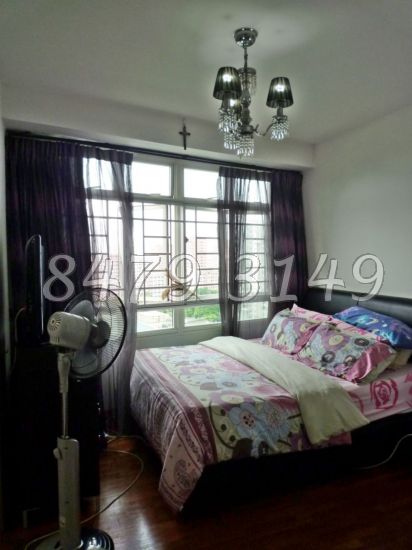
Masterbed Room

Living Room View from Dining Area

Cosy Living Room

After sharing with you on the interior of the house, don't you agree that the price asked for this unit is reasonable?

Call me NOW to arrange to view this unit. View to Offer for this unit. You will LOVE it!

Lovely Regards,
Lynn ONG (王丽英)
District Manager
ECG Property Novena District
L3009759F / R014-395F
BSc. Real Estate (NUS)
Mobile: (+65) 8479 3149
Blog: http://www.lynnlovelyhomes.blogspot.com/
[Blogging on Analysis of Listings and Real Estate News]